Zhang Yimou's House of Flying Daggers arrived in 2004 as a lush follow-up to his earlier wuxia epic "Hero." Set during the declining years of the Tang Dynasty, the film wraps a tragic love triangle inside stunning cinematography and pointed visual metaphor. This review examines the story, its recurring symbolism, and how Chinese culture and history shape nearly every frame on screen.
Despite occasional confusion online, House of Flying Daggers is a feature film rather than a television series. It runs under two hours and follows a single continuous narrative from start to finish.
What House of Flying Daggers Is About
The story unfolds in 859 AD, as corruption weakens the once-powerful Tang government. A rebel network called the House of Flying Daggers steals from officials and gives to the poor, earning quiet loyalty across the countryside.
Two police captains, Jin and Leo, suspect a blind dancer named Mei of ties to the rebels. Jin stages her escape from custody, hoping she will lead him straight to the group's hidden headquarters.
Nothing here stays simple for long. Deceptions stack on top of each other. Loyalties shift as Jin and Mei's manufactured relationship gradually becomes something neither of them planned.
The plot borrows structural elements from classic wuxia storytelling, where identity concealment and shifting allegiances typically drive the central conflict forward.
A Love Triangle Built on Deception
Andy Lau's Leo turns out to be an undercover agent embedded within the rebel movement, a role he has held for years. His own history with Mei complicates everything once Jin enters the picture.
Takeshi Kaneshiro's Jin starts his mission purely as tactics, treating Mei's rescue as bait for the rebels. That calculation erodes as their journey continues, replaced by something the script never lets him admit outright.
Zhang Ziyi's Mei carries the heaviest burden of deception. Her blindness, her rebel ties, and her true loyalties all remain uncertain until the film's final act forces every character to choose a side.
This tangle of loyalty and desire drives House of Flying Daggers toward its devastating conclusion. That finale was staged during an unplanned early snowfall the crew decided to keep in the finished film.
The love triangle works because none of the three leads gets a clean moral position. Each character lies to someone they claim to love, and the film lets that contradiction sit uncomfortably rather than resolving it neatly.
Color as Language: Reading the Film's Visual Metaphors
Zhang Yimou uses color the way other directors use dialogue. Each major setting carries a dominant hue that mirrors the emotional state of the characters moving through it.
The bamboo forest sequence bathes everything in green, a color associated with growth and concealment. Soldiers hide within the stalks. The ambiguity of who is hunting whom mirrors the visual uncertainty of the scene itself.
Later, a golden autumn field signals a shift toward intimacy between Jin and Mei. Warmth replaces suspicion, if only for a while, expressed entirely through the color surrounding them.
By the finale, snow blankets everything in white. That stark palette drains away the earlier warmth, leaving only grief and consequence. Few films use color this deliberately to track a story's emotional arc.
Chinese painting traditions have long used color symbolism this way, and Zhang Yimou draws directly from that visual vocabulary rather than inventing something entirely new for the screen.
Blindness as the Film's Central Metaphor
Mei's blindness operates on two levels throughout House of Flying Daggers. Literally, it defines how other characters treat and underestimate her. Symbolically, it reflects how nearly everyone in this story fails to see the truth clearly.
Jin cannot see that his mission has become love until it is almost too late. Leo cannot see that loyalty to an old cause has curdled into something closer to obsession. Even Mei's own sight, revealed as more complicated than it first appears, becomes a puzzle the film never fully resolves.
This layered blindness gives the film's tragedy weight. Characters stumble toward disaster not through malice, but through an inability to perceive what stands directly in front of them.
The metaphor extends to the audience too. Viewers spend much of the runtime uncertain which character is telling the truth, mirroring the same confusion the characters inflict on each other throughout the story.
Tang Dynasty History Behind House of Flying Daggers
Zhang Yimou grounds this story in a turbulent period of Chinese history. The Tang Dynasty's decline, driven by corrupt officials and weakening central authority, created conditions for rebel movements to flourish.
Historical uprisings against Tang rule inform the House of Flying Daggers concept directly. The specific rebel group depicted remains fictional, yet its portrayal draws on documented patterns of peasant unrest from the period.
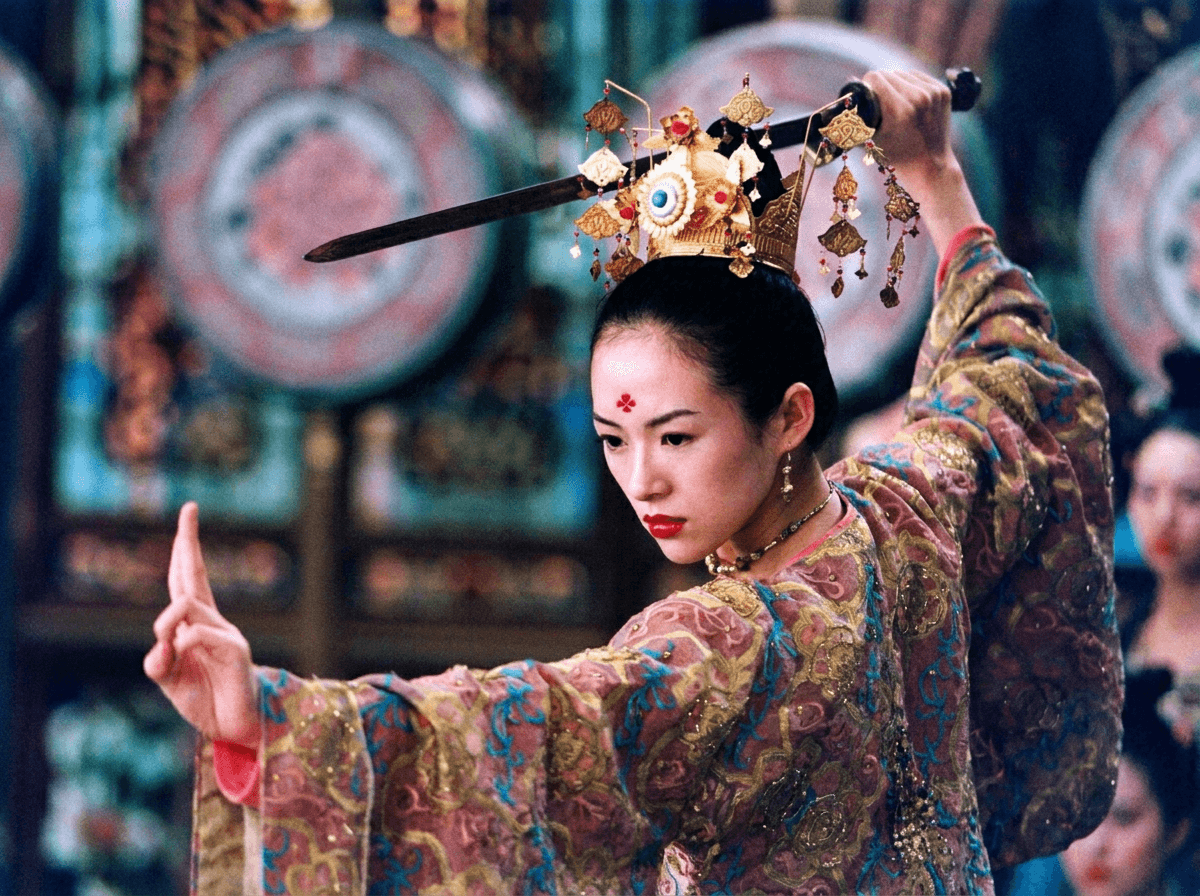
Costume and set design also reflect considerable historical research. Elaborate court garments and the martial arts choreography both draw on documented weapons and combat traditions from the era.
This attention to period detail separates House of Flying Daggers from wuxia films that treat history purely as decorative backdrop. Zhang Yimou clearly wanted the setting to feel earned rather than merely picturesque.
Where the Film Struggles
Some critics find the plot needlessly convoluted, with betrayals piling up faster than the emotional stakes can properly land. Motivations occasionally feel murky rather than intentionally mysterious.
The central romance also raises uncomfortable questions for some viewers, given how it begins under coercion and captivity before shifting toward mutual affection. That transition asks audiences to accept a lot rather quickly.
These criticisms carry weight, yet House of Flying Daggers remains a visually extraordinary achievement even where its narrative logic wobbles.
Pacing issues surface too, particularly in the middle stretch, where the plot's constant reversals sometimes prioritize surprise over coherence. A tighter edit might have sharpened the emotional payoff considerably.
The Echo Game and Chinese Performance Tradition
Early in House of Flying Daggers, Mei performs the Echo Game inside a teahouse, striking a circle of drums with her long sleeves while a guard throws beans to test her supposed blindness. The sequence has become one of the film's most celebrated set pieces.
This scene draws on Tang Dynasty court entertainment traditions, where dancers trained extensively in both music and physical precision. Zhang Yimou stages it as pure spectacle, yet the choreography also reveals character, showcasing Mei's discipline and hidden confidence before her true nature comes into question.
Traditional Chinese aesthetics prize this kind of layered performance, where technical skill and emotional expression operate simultaneously rather than as separate elements. The Echo Game distills that philosophy into a single unforgettable scene.
Why House of Flying Daggers Still Resonates
Modern audiences continue discovering House of Flying Daggers through streaming platforms and film school syllabi alike. Its influence on visual storytelling in wuxia cinema remains difficult to overstate.
The film also arrived during a period when Chinese cinema gained unprecedented international visibility, following the crossover success of "Crouching Tiger, Hidden Dragon" and Zhang Yimou's own "Hero." That context helped introduce global audiences to wuxia conventions many had never encountered before.
Beyond its historical importance, the film simply rewards repeat viewing. Its color symbolism and layered deceptions reveal new details each time, rewarding the kind of close attention casual blockbusters rarely invite from their audience.
Conclusion
House of Flying Daggers succeeds primarily as a work of visual storytelling, using color, choreography, and buried metaphor to communicate what dialogue alone could never quite capture. Its portrait of loyalty, deception, and doomed love remains moving, even when the plot mechanics creak under close scrutiny. Two decades later, this film still stands as one of the most visually accomplished entries in modern Chinese cinema, and its influence still shows up in how later wuxia productions frame color, weather, and landscape as emotional storytelling tools rather than mere backdrop.