Andy Weir's bestselling novel finally reached theaters in March 2026, and Project Hail Mary arrives on screen remarkably faithful to its source material. Director Phil Lord and Christopher Miller worked from a screenplay by Drew Goddard. Together they preserved the novel's core science and emotional arc. Yet several meaningful changes separate the two versions, and a few of them genuinely reshape what the story means.
Fans who devoured Weir's novel back in 2021 have spent years imagining exactly how this story might translate visually. Now that the film finally exists, comparing both versions reveals just how carefully filmmakers navigated dense scientific material.
What the Project Hail Mary Movie Gets Right
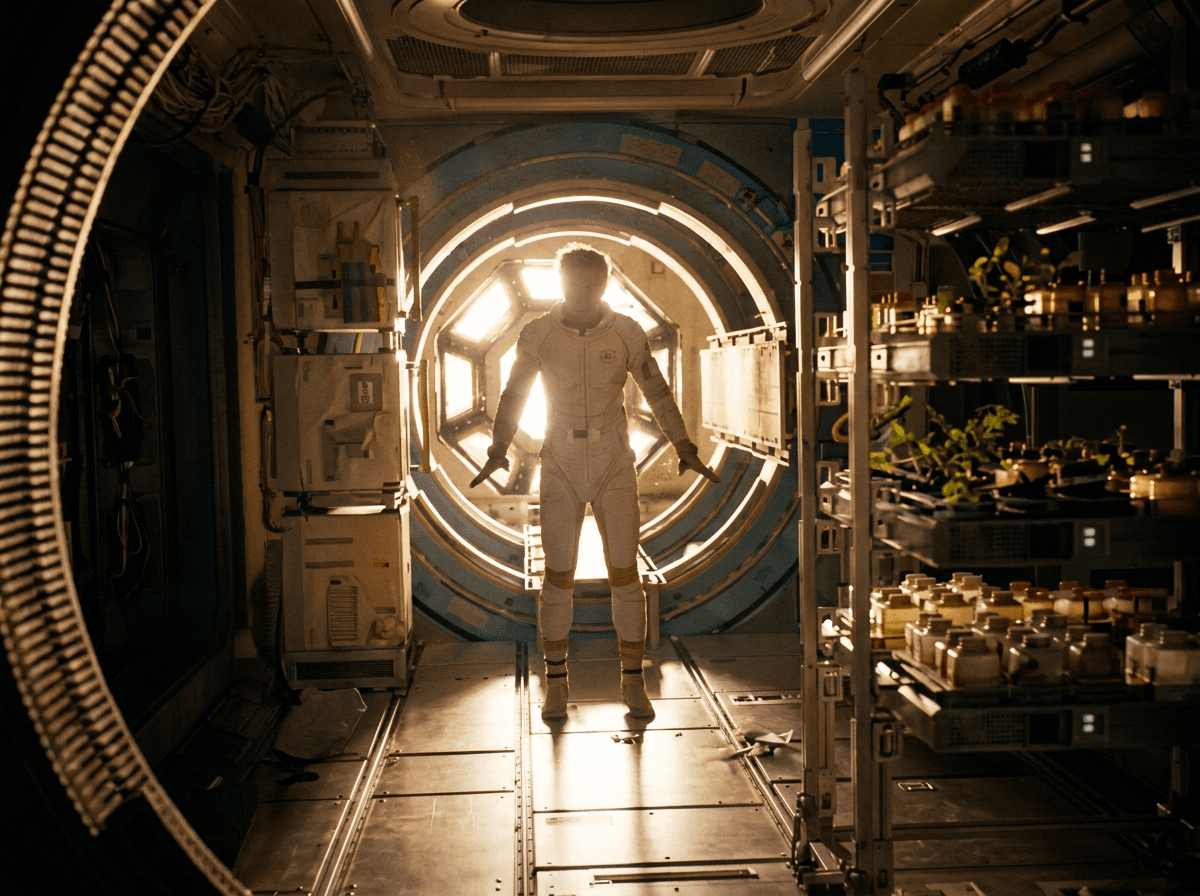
Ryan Gosling plays Ryland Grace, a molecular biologist who wakes up on a spacecraft with no memory of his mission. The film captures his gradual, panicked realization just as effectively as the book's opening chapters.
The core science survives the adaptation intact. Astrophage, the sun-consuming microorganism threatening Earth, translates faithfully to the screen. So does Grace's eventual alliance with an alien named Rocky.
James Ortiz brings Rocky to life through puppetry rather than pure computer animation. This choice gives the alien a tactile, physical presence. Many readers found that presence difficult to picture from Weir's prose alone.
Sandra Hüller also anchors the film's Earth-bound scenes as Eva Stratt, the administrator who assembled the entire mission from scratch.
Her scenes provide crucial context that the book delivers only through Grace's own scattered memories, giving the film a structural advantage the novel's single perspective could never quite match.
Together, these two performances carry the emotional weight of a story that spans a full solar system, grounding cosmic stakes in two very human, very specific points of view.
The Coma-Resistant Gene Subplot Disappears
One of the book's more technical narrative threads never made it into the film at all. In Weir's novel, mission planners screen every candidate for a rare genetic trait. That trait allows survival through years of induced coma.
Grace only joins the mission because he happens to carry this gene, after the original lead scientist dies unexpectedly. That entire thread gets skipped in Project Hail Mary, simplifying how Grace ends up alone on the ship.
This cut streamlines an already complex premise. Removing the genetic subplot lets the film reach its central mystery faster, without sacrificing anything essential to the emotional story.
Viewers who never read the novel likely never notice this gap, since the film explains Grace's presence clearly enough on its own terms.
Book readers, meanwhile, might miss the extra tension this subplot created, since the coma gene search doubled as a way to introduce several minor characters who never appear in the film at all.
A Faster Friendship With Rocky
Weir's novel spends months of story time on Grace and Rocky's growing partnership. Their invented language develops gradually. It gets built from musical tones and painstaking trial and error between two species.
On screen, this relationship compresses considerably. What feels like months in the book plays out closer to a few weeks in Project Hail Mary. Runtime constraints largely dictate this change.
This compression means Grace doesn't seem fully fluent in Rocky's language until the film's final act. Readers may notice the friendship feels somewhat rushed compared to the novel's more patient character development.
The emotional beats still land, though. Gosling and Ortiz's chemistry compensates for the shortened timeline through pure performance.
Puppetry helps considerably here too. A physical presence right there on set lets Gosling react to something tangible, rather than performing entirely against a digital effect added later in post-production.
Video Logs Replace Internal Narration
Weir's book relies heavily on Grace's first-person narration. Readers get direct access to his thoughts and scientific reasoning throughout the story. Translating that internal voice to film presented an obvious challenge.
Grace records video logs for Earth instead, addressed to whoever might eventually recover them. This clever solution lets Gosling deliver exposition naturally, without resorting to constant voice-over narration.
The choice also reveals character in a way pure narration cannot. Grace's humor and vulnerability come through in how he performs for an imagined future audience. That performance adds a layer the book handles quite differently.
This structural choice also gives editors a natural way to compress time. A quick montage of video logs communicates weeks of progress far more efficiently than pages of internal monologue ever could on screen.
Smaller Cuts Worth Noting
Several smaller subplots disappear entirely from the adaptation. The book's detailed plan to power astrophage production using solar panels across the Sahara Desert never appears on screen.
The film also skips a genuinely unsettling detail from the novel's final stretch. Weir's book reveals that Grace survives on Erid partly by eating lab-grown meat, cloned from his own tissue. Filmmakers chose to leave that queasy twist on the page.
These omissions reflect the same instinct guiding most changes here. Filmmakers trimmed material that slowed pacing or clashed with the story's ultimately hopeful tone.
Purists sometimes mourn these particular cuts, arguing they strip away texture that made Weir's prose feel so meticulously researched and grounded. Casual moviegoers, however, likely never miss details that exist mainly to satisfy readers craving hard science fiction accuracy.
Why the Project Hail Mary Ending Feels Different
Both versions end with Grace choosing to remain on Rocky's home planet rather than return to Earth. The events themselves stay identical between formats. Yet the emotional meaning shifts in a subtle, important way.
The book strongly implies Grace has little genuine desire to go home. It frames his choice as quiet acceptance of a new life. The film instead makes his decision feel more like an active, ongoing choice.
In the movie, Rocky's people repair Grace's ship and offer him a real option to leave. Grace tells Rocky he will think about it, and the film ends without fully resolving that tension.
Directors Lord and Miller have said this ambiguity was deliberate. A character who stays because leaving remains impossible tells a different story. One who stays despite having a genuine way out tells something else entirely.
Which Version Should You Experience First
Neither order ruins the experience, though each offers something distinct. Reading the novel first delivers Weir's meticulous scientific detail. It also delivers Grace's complete internal voice before the film's visual spectacle arrives.
Watching the Project Hail Mary movie first offers a faster, more streamlined introduction to the story. Fans can then return to the book for deeper scientific explanations and slower character development.
Either path leads to the same core story, just told through genuinely different creative choices. Readers who loved Weir's earlier novel "The Martian" will likely recognize similar strengths here, since both stories balance hard science against genuine warmth and humor.
That balance is really what makes this particular adaptation work. Weir's fiction has always leaned on competent, resourceful characters solving problems methodically, and both the novel and the finished film keep that spirit fully intact.
Conclusion
Project Hail Mary succeeds precisely because it respects Weir's source material while making thoughtful adjustments for the screen. Most changes simply compress a dense novel into a manageable runtime. The ending's altered meaning stands out as the one genuine reinterpretation, transforming quiet acceptance into an ongoing, deliberate choice. Whichever version you experience first, Grace's decision to stay with Rocky lands as the emotional core either format was always building toward.