
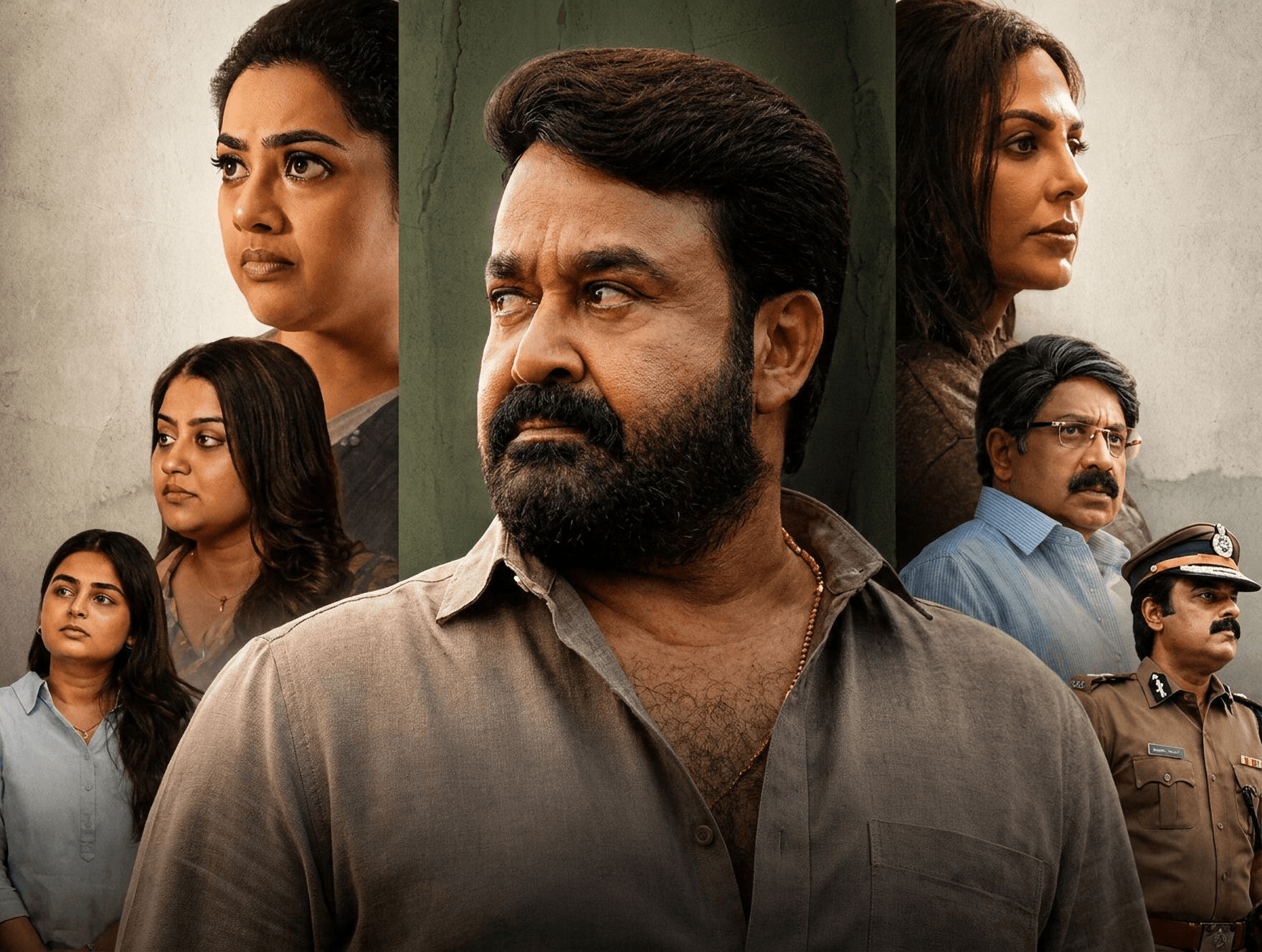
Bollywood thrillers spent decades leaning heavily on masala formulas, loud background scores, and larger-than-life heroes chasing equally exaggerated villains. Then came Drishyam. This quiet film centered an ordinary man protecting his family through sheer intelligence rather than fists or gunfire. This article traces how the genre shifted after this single film. Patient, plot-driven storytelling suddenly proved it could dominate at the box office too.
Few crime films arrive with this much cross-industry influence. Drishyam spawned remakes across half a dozen languages, reshaping how studios approach the genre entirely.
Bollywood Thrillers Before Drishyam
Crime stories in mainstream Hindi cinema traditionally relied on action set pieces and moral clarity. Heroes fought corrupt cops or gangsters directly, and audiences always knew exactly who deserved punishment by the final act.
Twists existed, but they rarely demanded close attention from viewers. Most Bollywood thrillers signaled their reveals well in advance, prioritizing spectacle over narrative complexity.
Slow-burn tension, the kind built through careful plotting rather than loud confrontation, remained rare. Audiences expected songs, fights, and melodrama woven through any crime story, regardless of how serious its subject matter actually was.
Critics occasionally praised individual films for tighter plotting. Yet no single title had managed to shift audience expectations for the genre as a whole, at least not until Drishyam arrived on screens.
Studios treated crime dramas as a reliable but limited category, rarely worth the marketing investment given to bigger action franchises or romantic blockbusters.
What Drishyam Actually Changed
Drishyam arrived first in Malayalam in 2013, directed by Jeethu Joseph and starring Mohanlal as a cable operator who fabricates an elaborate alibi after his daughter accidentally kills a man blackmailing her. The Hindi remake followed in 2015, starring Ajay Devgn and Tabu.
This story succeeded specifically because its hero wins through logic rather than violence. Vijay Salgaonkar, the Hindi version's protagonist, never throws a punch. He outsmarts a relentless police investigation using nothing but memory, timing, and an obsessive knowledge of films.
Bollywood took notice of this approach immediately. The Hindi remake grossed nearly ₹94 crore domestically. That number proved mainstream audiences would embrace a hero whose only weapon was careful planning.
Word of mouth carried much of that success, since audiences kept returning specifically to discuss and dissect the film's final twist with friends and family.
The Ordinary Hero Bollywood Thrillers Needed
Vijay Salgaonkar has no formal education beyond fourth grade, no useful police connections, and no special training whatsoever. His intelligence comes entirely from a lifetime spent watching films obsessively.
This detail resonated deeply with audiences who rarely saw themselves reflected in typical action heroes. Hindi cinema had long favored characters with exceptional skills or resources, not an average father solving problems through pure resourcefulness.
Tabu's performance as the pursuing police officer added further weight, since her character never feels like a cartoonish antagonist. She simply wants justice for her own son, creating a difficult moral tension the film never fully resolves.
That moral ambiguity became one of the film's defining strengths. Neither side feels entirely right, and audiences often leave the theater still arguing about who actually deserved to win.
A Remake That Traveled Far Beyond India
Drishyam's success triggered an unusually large wave of official remakes across Indian languages. Tamil, Telugu, and Kannada versions all reached theaters within just a couple of years of the original.
The story eventually reached far beyond India entirely. A Chinese adaptation titled "Sheep Without a Shepherd" became a massive hit. Sri Lankan and South Korean versions followed as well, each adapting the plot to local customs and legal systems.
This international reach demonstrated something significant about Bollywood thrillers built around universal themes. Family protection and moral compromise translate across cultures far more easily than country-specific action tropes ever could.
A Hollywood adaptation is also reportedly in development, a rare distinction for a film that began as a modestly budgeted Malayalam production.
Very few Indian films ever achieve this level of cross-border interest, which speaks to how universally recognizable the story's central dilemma actually feels to audiences everywhere, regardless of language or nationality.
Drishyam 2 and the Sequel Boom
Jeethu Joseph directed a Malayalam sequel in 2021, once again starring Mohanlal, followed by a Hindi version in 2022 starring Devgn and Tabu again under director Abhishek Pathak.
The sequel picks up years later, as police reopen the original case despite the family's careful cover-up. Both versions performed strongly at the box office, confirming audience appetite for continued investment in these specific characters.
This sequel success pushed other Bollywood thrillers toward multi-part storytelling too. A strong crime premise increasingly gets treated as a franchise opportunity rather than a single, self-contained release.
A third installment is already confirmed for release, suggesting Joseph and his cast see plenty of remaining story left to tell within this particular family's ongoing predicament.
Few Indian franchises maintain this level of continuity across a full decade, keeping the same director and lead actors returning to the same characters film after film.
The Screenwriting Craft Behind Drishyam's Success
Every clue in Drishyam appears on screen well before the final reveal explains its purpose. Jeethu Joseph's screenplay plants small, seemingly unimportant details early, then pays them off with precision during the investigation sequences.
This kind of disciplined structure was rare among Bollywood thrillers at the time. Writers often prioritized emotional beats and star moments over the kind of airtight plotting that rewards a second viewing.
Vijay's obsession with cinema itself becomes a clever storytelling device too. His plan works specifically because he has absorbed decades of crime films, giving the story a self-aware quality without ever breaking its own internal logic.
Screenwriters across the industry have since cited Drishyam as a genuine model for constructing a mystery that plays fair with its audience, never withholding information simply to manufacture false suspense.
The Ripple Effect Across Bollywood Thrillers Today
Films released after Drishyam increasingly favor methodical plotting over pure spectacle. Directors now trust audiences to follow complex timelines and delayed reveals without constant hand-holding through exposition.
Regional cinema also gained newfound respect within the wider Hindi film industry. Studios started actively scouting Malayalam and Tamil productions for remake potential. They recognized that strong writing could travel just as effectively as any star performance.
Bollywood thrillers today frequently borrow Drishyam's central formula. An underestimated protagonist, a patient investigation, and a resolution that rewards careful viewers now appear across countless crime releases every year.
Streaming platforms have accelerated this shift further, giving quieter, dialogue-heavy thrillers a viable release path that a crowded theatrical calendar might otherwise deny them entirely.
Conclusion
Drishyam proved that Bollywood thrillers did not need explosions or larger-than-life heroes to succeed commercially. A cable operator's careful lies, built scene by scene through patient plotting, captivated audiences across languages and borders alike. That success reshaped what mainstream Hindi cinema believed audiences actually wanted. It opened space for smarter, quieter crime stories that continue shaping the genre today. A decade later, the industry is still following the trail this one film blazed, and its influence shows no real sign of fading as new writers keep studying its structure.