Casting decisions shape a film long before a single scene gets shot, and history is full of near misses that would have changed everything. Some of the most memorable performances almost went to other actors entirely. This article looks at how a handful of beloved films came within days, or even hours, of an entirely separate lineup of actors. It also explains what almost happened instead.
Why Actors Get Replaced So Often
Actors get replaced for reasons that rarely make it into the final credits. Scheduling conflicts, creative disagreements, and shifting studio priorities all push directors toward new actors at the last moment.
Typecasting plays a role too. Studios often want actors known for certain actor types, tied to roles they have already played successfully. Directors, meanwhile, may want performers who can stretch across different types of parts. Some actors actively seek out different roles just to avoid being pigeonholed for years. Producers often weigh several kinds of roles when evaluating who might fit a single part, long before any actor sees a finished script.
Some actors simply turn down roles for reasons that only become clear later. A script may look unpromising on paper, or an actor may already be committed elsewhere.
Directors take real risks when swapping actors mid-production, since reshoots cost money and can delay a release by months. Yet many have made this call anyway, betting that another actor could bring more range to the part.
These decisions also open new opportunities for actors waiting for a breakout role. A last-minute recasting can turn an unknown performer into a star almost overnight. One actor simply steps aside, and another actor steps into the same character instead.
Back to the Future: Michael J. Fox Replaces Eric Stoltz
"Back to the Future" nearly gave audiences an entirely separate version of Marty McFly. Eric Stoltz filmed several weeks of scenes before director Robert Zemeckis decided the tone was not working — Stoltz was formally let go on January 10, 1985. Stoltz played the character with a dramatic, internal range that suited kinds of roles far removed from what the story actually needed.
Michael J. Fox was the studio's original choice, but his television schedule made him unavailable at first. Once producers reworked the shooting schedule, Fox stepped into the role and reshot nearly every scene Stoltz had already completed. This effectively replaced an entire performance most audiences never got to see.
Fox brought comedic timing and youthful energy that matched the tone the filmmakers wanted for this particular character. He committed fully to playing a lighter, more mischievous version of the part than Stoltz had attempted. Reshooting an entire project this late is a massive gamble for any director. Yet the finished film became one of the most beloved of its decade. Few casting swaps illustrate as clearly how much range two separate actors can bring to the exact same role.
Deleted footage of Stoltz still circulates among dedicated fans today, offering a rare chance to see how differently the story might have landed. Watching those scenes now feels almost like glimpsing an alternate universe, one where a talented actor simply played the role his own way instead.
The Lord of the Rings: Viggo Mortensen Steps Into Aragorn
Peter Jackson's "The Lord of the Rings" trilogy also involved a significant late change among its actors. Stuart Townsend was originally cast as Aragorn and had already begun rehearsals. Jackson then decided he needed an older actor for the part. Townsend was let go just days before filming began.
Viggo Mortensen received a call about the role while traveling with his son, and he accepted with very little time to prepare. He arrived on set within days, learning fight choreography and dialogue at a pace few actors could manage for a character this demanding.
Mortensen's commitment extended far past the script. He trained extensively with weapons and learned some Elvish dialogue on his own. He immersed himself in Tolkien's world well beyond what the role technically required. That range of preparation gave Aragorn a weathered, lived-in quality. It resonated deeply with critics and audiences alike.
Townsend has spoken since about the disappointment of losing the role so close to filming. Few actors get a chance to define a character this completely on short notice. Mortensen made the most of new opportunities that most actors would find overwhelming under that much pressure.
The rest of the ensemble had already bonded during rehearsals, which made Mortensen's sudden arrival even more disorienting for everyone involved. Somehow, that unfamiliarity fed directly into Aragorn's own uncertain place among the fellowship. Audiences watching the finished film never see anything but total confidence in the role.
The Matrix: Keanu Reeves Instead of Will Smith
"The Matrix" almost starred Will Smith as Neo, a decision he has openly discussed regretting for years afterward. Smith turned down the role to star in another project instead. He has since called that choice one of his biggest professional missteps as an actor.
The Wachowskis eventually cast Keanu Reeves, whose quieter, more introspective acting style suited Neo's journey from confused office worker to reluctant hero. Reeves brought a physical stillness to the role. It let the story's more philosophical dialogue land without feeling forced onto the character.
Smith has said publicly that he simply could not see the concept working the way it eventually did. The story sounded confusing on paper before actors and effects came together. That miscalculation happens more often than audiences realize. It shows how two separate actors can interpret the exact same character description on the page.
Reeves also trained for months in martial arts and wire work, giving the role a physical range that matched its ambitious visual style. The film's success helped redefine what action films could look like. Viewers today can hardly see any other actor carrying that particular character as effectively, since Reeves and the role have become inseparable in most people's minds.
Smith has revisited this decision in interviews many times since, admitting he simply could not picture the finished product while reading an early draft of the script. That gap between a script on the page and a fully realized world on screen trips up even experienced actors more often than audiences might expect.
Titanic: Leonardo DiCaprio Beats Out Matthew McConaughey
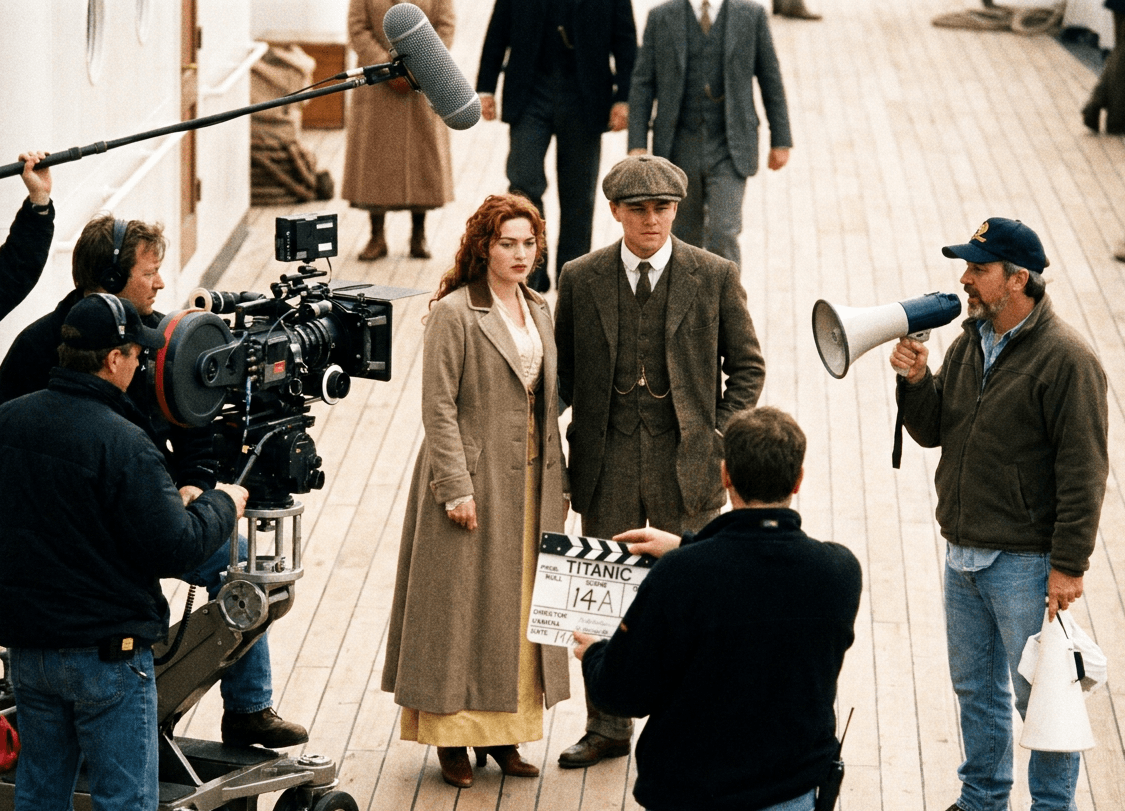
"Titanic" nearly gave audiences an entirely separate Jack Dawson. Matthew McConaughey auditioned opposite Kate Winslet during the audition process. He came remarkably close to landing the role, according to accounts from producer Jon Landau. At the time, McConaughey was already an established actor thanks to earlier film roles.
James Cameron ultimately chose Leonardo DiCaprio instead. He wanted a younger, less recognizable performer who could disappear into the part rather than carry outside baggage into the role. DiCaprio's own audition nearly went sideways too, since he initially thought it was simply a casual meeting rather than a formal screen test.
That single decision reshaped both careers dramatically. DiCaprio became one of the most recognizable actors of his generation almost overnight. McConaughey continued building a separate path through comedies before later reinventing himself as a dramatic lead.
Losing a role this large might have derailed a lesser actor's confidence entirely. Instead, McConaughey has spoken candidly about the audition in interviews since, treating it as one interesting turn among many rather than a defining regret. Few examples illustrate as clearly how differently two capable actors can shape the same role. A single decision can alter the trajectory of a film's legacy.
Conclusion
These stories show how a film can turn out very differently once one actor steps aside for another. Back to the Future, The Lord of the Rings, The Matrix, and Titanic all prove one thing. An entirely separate lineup of actors was only ever one decision away in each case. Range, timing, and a willingness to take risks on new actors often separate a forgettable role from an unforgettable one. Separate actors bring distinct qualities to the same part, and a single casting choice can define a character for generations.
Audiences rarely see how many actors were considered before the right one landed the role. That hidden history rarely changes how deeply a character resonates once the film is finished. The next time a favorite character comes to mind, it is worth remembering how easily another actor might have played that same part instead.