Every great chase, fall, and explosion on screen begins with careful stunt work long before any camera ever rolls. For nearly a century, stunt performers have shaped how audiences experience danger, speed, and physical risk in film. This article traces how the stunt profession evolved across the decades. It also explains what those changes reveal about the broader genre it helped build.
From uninsured silent-era falls to today's digitally assisted sequences, every single stunt tells a story about the technology and safety standards of its particular time. Understanding that long history changes how audiences watch even a familiar chase scene.
Necessity Breeds a New Profession
Early filmmakers had no safety net, literally or figuratively. Stunt performers in the silent era often doubled as writers, directors, and even studio heads. The industry itself was still inventing its own rules. Buster Keaton famously performed his own falls, climbs, and near-misses. He rarely used doubles, even when the risk was substantial.
This period established a template that persisted for decades. Physical comedy and genuine peril blurred together. Cameras of the time struggled with effects that could convincingly fake danger. A performer either committed to the real thing, or the scene simply did not land on screen.
Injuries were common and rarely discussed openly. Studios treated physical risk as an accepted cost of production. Few formal safety standards existed. Performers relied almost entirely on personal skill and instinct rather than any structured training system.
Keaton, Lloyd, and the Industry's Anonymous Pioneers
Despite the danger, this era produced some of the most genuinely thrilling sequences ever filmed. Audiences could sense the difference between a staged illusion and a performer risking real injury. That authenticity became part of the appeal early cinema offered.
By the end of this period, a recognizable profession had emerged. Coordinators began organizing more complex stunt sequences, even without modern safety equipment. This laid early groundwork for an entire specialized field within the industry.
Harold Lloyd's famous clock-tower sequence remains one of the era's most enduring images, achieved through camera tricks and genuine risk combined rather than either alone — with stunt double Harvey Parry performing the most dangerous long shots on the building exterior. That blend of illusion and authentic real danger would define the profession for decades to come.
Studios of this period rarely acknowledged the performers behind these sequences by name, treating physical risk as simply part of the job rather than a specialized craft deserving public recognition. That anonymity would persist for much of the industry's early history.
Studios Bringing Structure to Danger
As studios matured through the 1930s and 1940s, stunt performance grew more structured. Coordinators began treating dangerous sequences as choreography rather than improvisation. They planned falls, fights, and car chases with far greater precision than earlier decades allowed.
Westerns became a proving ground for this evolution. Horse falls, saloon brawls, and gunfights required specialized techniques. These techniques separated professional stunt performers from general background actors. Studios started maintaining rosters of trusted performers who specialized in specific types of physical risk.
Safety equipment slowly improved during this period, though by modern standards it remained primitive. Padded flooring, hidden wires, and basic airbags began appearing on sets. Injury rates dropped even as the sequences themselves grew more ambitious and visually daring.
Unions, Marketing, and the Rise of the Double
Union organization also took root during these decades. Performers began advocating for standardized pay and safer conditions. This formalized a profession that had previously operated almost entirely through informal reputation and personal connections.
This era also saw the beginning of stunt performance as marketed spectacle. Studios promoted death-defying sequences in advertising, turning skilled performers into a selling point even when their individual names rarely appeared in the credits.
Doubling arrangements also became more formalized during this stretch. A leading actor's specific look and build now had to match a designated performer closely, adding a logistical layer to casting that earlier productions rarely needed to consider. Studios kept detailed records matching performers to specific stars for exactly this reason.
Hal Needham and the Practical Stunt Boom
This period is often considered a golden age for large-scale practical stunts. Car chases, building falls, and elaborate fight choreography reached new levels of ambition. Competition among filmmakers pushed everyone to top the last picture's most memorable sequences.
Hal Needham, a former stuntman turned director, became emblematic of this era's philosophy. His films prioritized genuine practical stunts over visual trickery. His own extensive injury history — 56 broken bones over his career — reflected just how physically demanding this approach truly was.
Cars became central to this period's most memorable action sequences. Elaborate chases, jumps, and crashes required precise engineering alongside raw physical skill. This blended stunt performance with increasingly sophisticated mechanical preparation.
The Price of Ambition
Coordination between departments grew more sophisticated during this time as well. Special effects teams, stunt coordinators, and camera operators collaborated closely. Together they captured dangerous sequences while still preserving the visceral impact audiences expected.
Despite genuine improvements, injuries and even fatalities still occurred during this ambitious period. High-profile accidents eventually prompted renewed conversation about balancing spectacle against performer safety, a debate that continues shaping the profession today.
Franchise filmmaking amplified these pressures further. As sequels raised expectations for scale, coordinators faced constant pressure to outdo the last installment's biggest sequence, pushing practical stunts closer to their physical limits with each new release.
Digital Tools Extend the Human Body
Digital effects transformed the field beginning in the 1990s, though not in the way many originally predicted. Rather than replacing physical performers entirely, technology increasingly extends what a human body can safely accomplish on set.
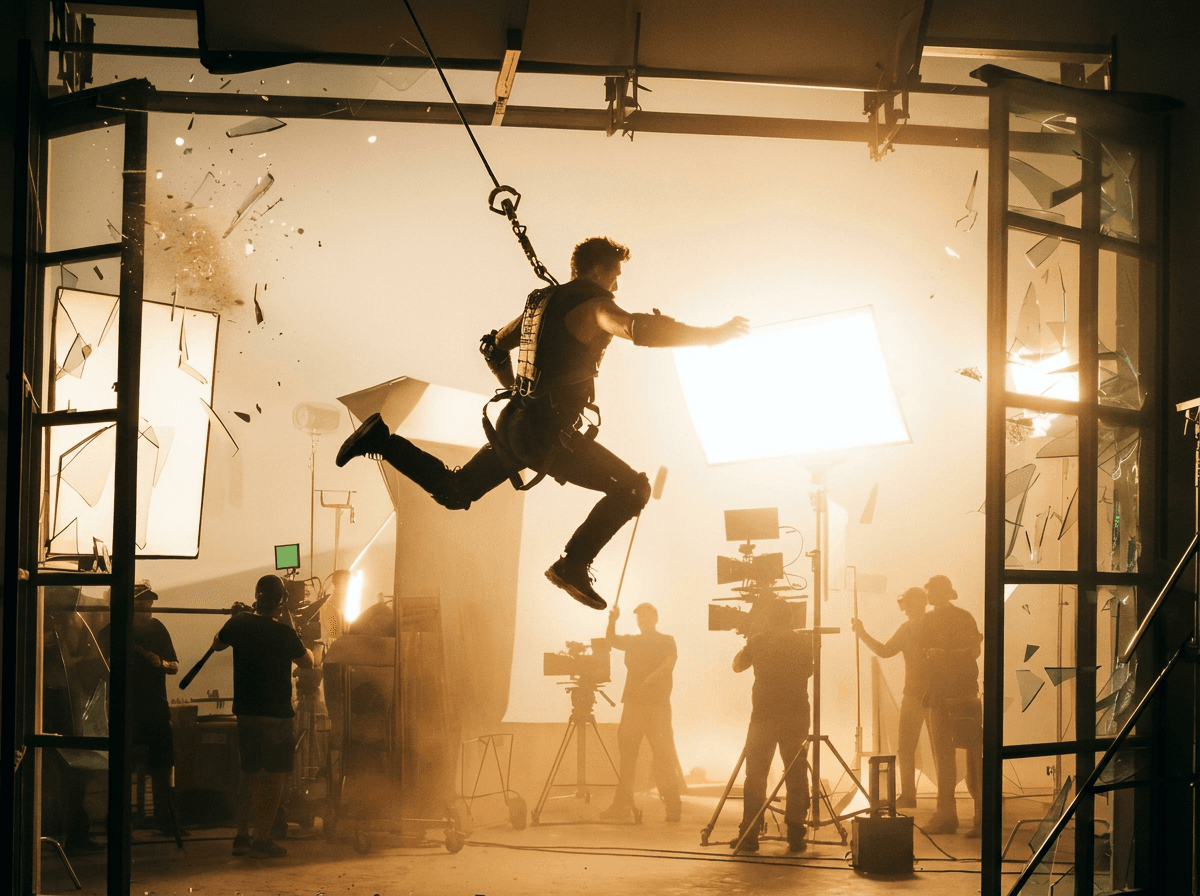
Wire removal technology allows performers to attempt genuinely dangerous falls and flights, with safety lines digitally erased afterward. This blend of practical craft and digital polish lets filmmakers preserve authentic physical performance while still protecting the people actually taking the risk.
Motion capture technology has also opened new creative possibilities. Stunt performers now sometimes portray entirely digital characters. Their physical timing and precision translate into animated action that pure computer animation alone could not achieve.
Conclusion
Stunt performance has traveled an extraordinary distance from Buster Keaton's uninsured falls to today's carefully engineered, digitally enhanced sequences. Each decade added new techniques, safety standards, and creative possibilities. Yet the underlying goal has remained constant: convincing audiences that real danger exists just beyond the edge of the frame.
As action filmmaking continues evolving, the people performing these sequences remain the genre's most essential, if still underappreciated, creative force. The next time a film's biggest sequence leaves an audience breathless, it is worth remembering the decades of accumulated skill, sacrifice, and innovation that made that single moment possible.